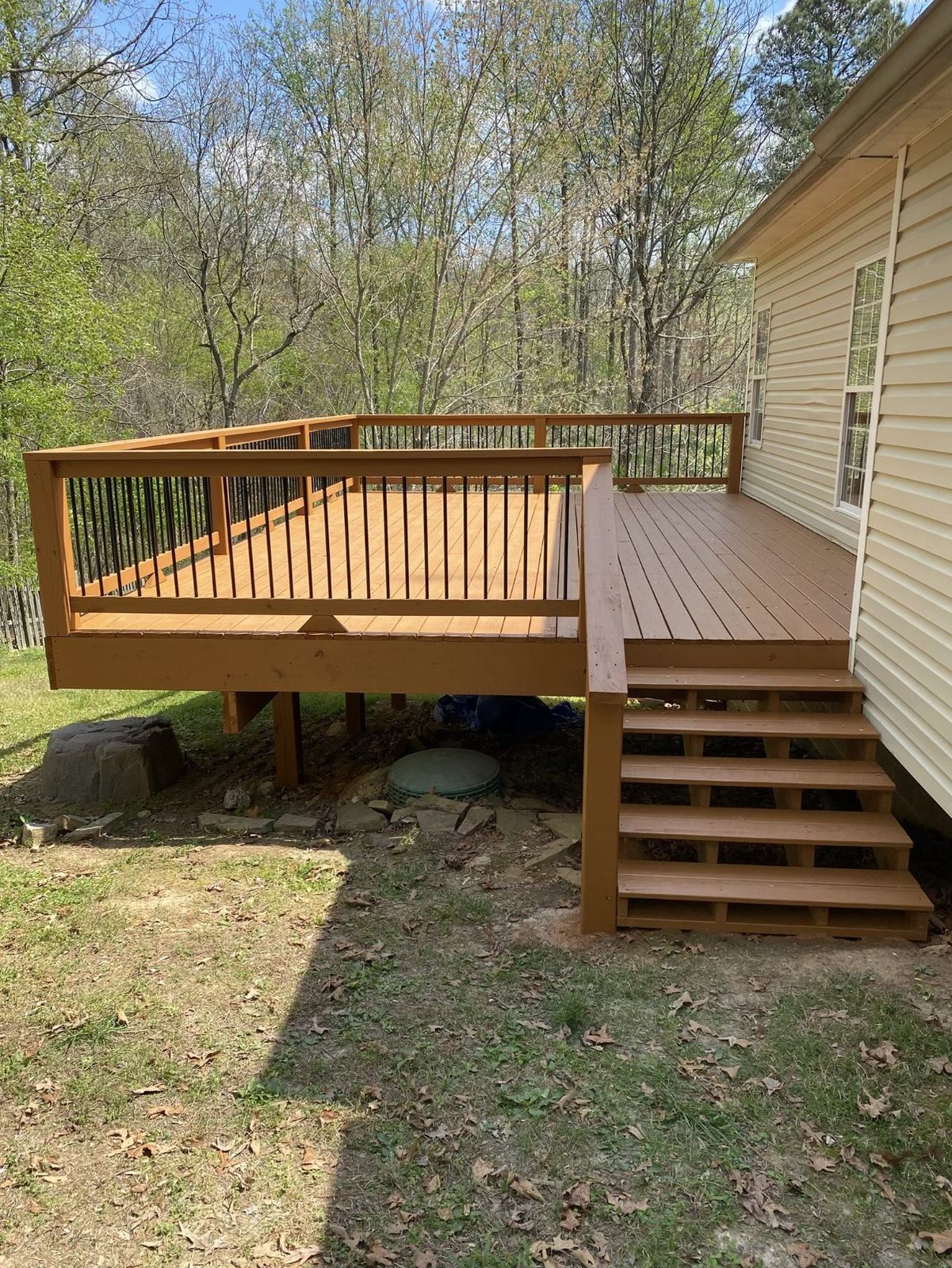
Deck and fence staining is a big part of the work we do around Cleveland, TN, Chattanooga and the rest of Bradley and Hamilton County. One of the most common staining questions isn't about color. It's "When should I do this?" Here's a practical guide you can use whether you stain it yourself or hire it out.
Signs your deck or fence is ready for stain
- The water test. Sprinkle some water on a few boards, especially the sunniest ones. If it beads up, the finish is still doing its job. If it soaks in and darkens the wood within a few minutes, the wood is mostly unprotected and it's a good time to plan for stain.
- Graying or silvering. Sunlight breaks down the surface of bare or under-protected wood and turns it gray.
- Faded color. Deck boards and stair treads take far more sun and foot traffic than railings or fence pickets, so they usually wear first.
- Peeling or flaking. This is more common with solid stains and paint than with penetrating stains. Loose coating generally has to come off before anything new goes on.
- Green or black growth. Mildew, algae and moss like shady, damp spots, such as the bottom of a fence line or a deck under trees. Clean it off before staining; stain won't bond well over it.
How often you'll need to restain depends on sun exposure, the type of stain, the wood and how much traffic it gets. Rather than going by the calendar, do the water test each spring and take a close look at the sunniest boards.
The best seasons for staining in East Tennessee
Stain cares about three things: temperature, moisture in the wood, and rain.
- Spring and fall are usually the easiest. Mild days and stretches of dry weather give stain a fair chance to soak in and dry evenly.
- Summer can work, but heat and humidity make it trickier. Boards in direct afternoon sun can get hot enough that stain dries before it soaks in, which can leave lap marks. Staining early in the day or following the shade helps, and watch for pop-up afternoon storms.
- Winter is usually the hardest. Short days and cold nights leave a small window, and conditions need to stay right while the stain dries, not just while you apply it.
- Watch the dew. Even in a good season, heavy morning dew can keep boards damp for hours. Wait until the surface is dry, and hold off if rain is likely before the stain sets.
Read the label first. Most stain makers recommend checking the label for temperature ranges, how dry the wood should be, how long to wait after rain, and how long the stain needs before it can get wet. Those instructions beat any general rule of thumb, including ours.
What about new wood?
New pressure-treated lumber is often too wet to take stain well right away, and many manufacturers suggest letting it dry out first. The water test works here too: when water soaks in instead of sitting on top, the wood is usually ready. Check your stain's label for its guidance on new wood.
Prep: where a good stain job really happens
- Clear and protect. Move furniture, grills and planters. Cover plants, siding and anything nearby you don't want stained.
- Repair. Replace cracked or rotted boards, reset popped nails and tighten loose railings.
- Clean. Use a cleaner made for decks and wood to lift dirt, mildew and gray surface fibers. A pressure washer can help, but too much pressure can gouge and fuzz the wood, so keep it gentle and keep the tip moving.
- Strip if needed. If the old finish is peeling, or you're going from a solid stain to a more see-through one, the old coating usually needs to come off.
- Let it dry. Give the wood time to dry fully after washing. Follow the product label for how long.
- Sand rough spots, especially handrails and splintery treads.
- Test your color. Try the stain on an out-of-the-way spot. Color on the can rarely matches color on your wood exactly.
When you apply, work a few boards at a time along their full length to avoid lap marks, and wipe up puddles. With penetrating stains, more isn't better: excess that doesn't soak in can stay tacky or wear unevenly.
A quick word on stain types
- Transparent or clear: shows the most grain but usually needs recoating sooner.
- Semi-transparent: adds color while letting the grain show. A popular middle ground.
- Solid: the most color and coverage. It behaves more like paint and tends to peel over time rather than fade.
Fence-specific tips
- Decide early whether you're staining one side or both.
- Trim plants back so the fence can dry out, and aim sprinklers away from the pickets.
- The bottom of a fence near the ground stays damp longest, so check it closely for rot and growth.
- If you spray, watch the wind. Overspray can drift onto cars, siding and windows.
Want a hand with your deck or fence?
If you’d rather enjoy your weekends than stain, we stain decks, fences, rails and stairs in Cleveland, TN, Chattanooga, Ooltewah, East Ridge, Collegedale and nearby. Send a few photos through the free estimate form and we’ll get back to you. You can also see some of our deck work in the gallery.