If your kitchen feels dated, the cabinets are usually the biggest thing you see. Replacing them is one route; painting them is another. Neither is right for every kitchen, so here's how to think it through, whether you're in Chattanooga, Cleveland, TN or anywhere else.
Start with the cabinet boxes, not the color
Paint changes how cabinets look. It doesn't fix how they're built. Open the doors and take an honest look:
- Are the boxes solid? Check under the sink and around the dishwasher for water damage, swelling, soft spots or peeling layers.
- Do the doors and drawers work? Hinges and drawer slides can usually be adjusted or replaced. Sagging shelves, broken face frames and crumbling particleboard are bigger problems.
- What are they made of? Solid wood and wood veneer are usually good candidates for paint, and MDF often paints well too. Laminate and thermofoil (the smooth, vinyl-wrapped kind) are trickier because paint has a harder time bonding to them. Thermofoil that's already peeling generally isn't worth painting over.
If the boxes are sound and the material will hold paint, painting is a real option.
Do you like the layout?
Painting keeps everything where it is. If you're happy with where the sink, stove, fridge and cabinets sit, paint can give the kitchen a big visual change without a remodel. If you want to move appliances, add an island, change cabinet sizes or gain storage, replacement (or a larger remodel) may serve you better.
Cost, time and disruption
Every kitchen is different, so we won't throw out numbers here. In general, painting costs considerably less than new cabinets, partly because countertops, backsplash and plumbing usually stay put. Replacing cabinets often means pulling the countertops too, and the project can grow from there.
Painting still takes the kitchen partly out of commission. Doors and drawer fronts are usually removed and finished separately while the boxes are painted in place. How long it takes depends on the number of doors, the condition of the cabinets and the products used, so ask for a timeline up front, whoever does the work.
What a durable cabinet paint job involves
Cabinets get touched, bumped, splashed and wiped every day, so prep matters even more than it does on walls.
- Remove and label. Take off doors, drawer fronts and hardware, and label everything so it goes back where it came from.
- Clean and degrease. Kitchen grease, especially near the stove and around handles, is often invisible and is one of the most common reasons cabinet paint doesn't stick.
- Scuff sand. A light sanding gives primer something to grip. Fill dings and gouges now.
- Prime. Use a primer suited to the surface: a bonding primer for slick finishes, or a stain-blocking primer for woods that can bleed through paint.
- Paint in thin coats. Use a paint made for cabinets or trim, which is formulated to level out and harden. Brushing, rolling and spraying each give a slightly different look.
- Give it time to cure. Paint can feel dry within hours but usually takes much longer to fully harden. Be gentle for the first few weeks and check the label for cure times.
About oak grain: the open grain on oak cabinets usually shows through paint. Some people like that texture. If you want a smooth, modern look, ask about grain filling before you start.
Color, sheen and hardware
- Color: whites and off-whites are classic, and soft grays, greens and navy are popular too. Two-tone kitchens, with darker lowers or a contrasting island, are another option. Look at samples in your own kitchen in both morning and evening light.
- Sheen: satin and semi-gloss are common for cabinets because they wipe clean more easily than flat finishes.
- Hardware: if you're switching to pulls with a different hole spacing, decide before painting so old holes can be filled and new ones drilled first.
Quick gut check: paint or replace?
Painting probably makes sense if the boxes are solid, the layout works for you, the cabinets are wood, veneer or MDF, and you want a fresh look without a full remodel.
Replacing may make more sense if there's water damage or structural trouble, the thermofoil is peeling, you want a different layout or more storage, or you're already planning a full remodel.
Thinking about painting your cabinets?
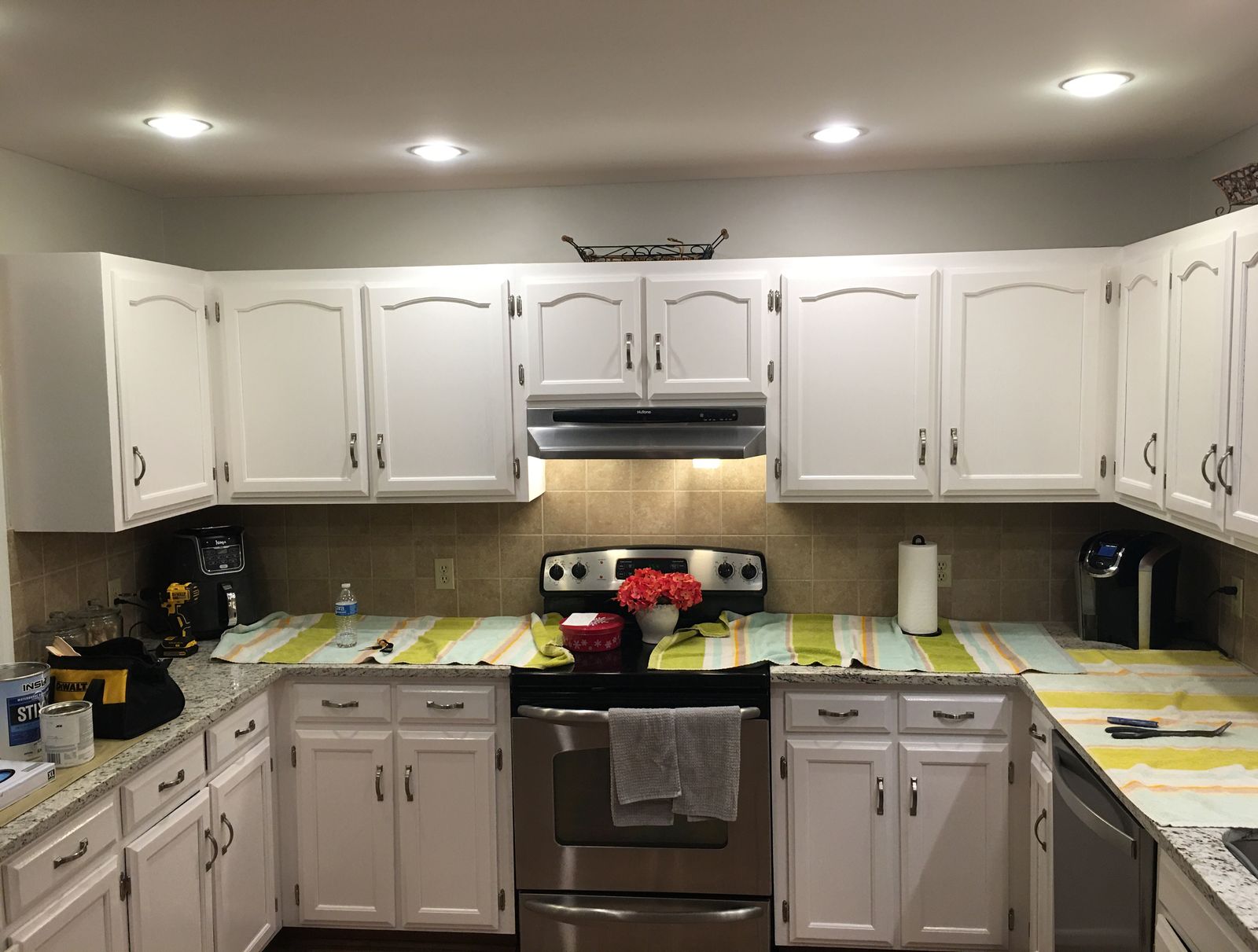
We paint kitchen cabinets for homeowners in Chattanooga, Cleveland, TN, Ooltewah, Collegedale, East Ridge and nearby. You can see a cabinet job in our gallery. If you’d like a second opinion on whether yours are good candidates, send photos through the free estimate form or call or text. No pressure either way.